
Why the process of photography matters more than you think
Most photographers, tend to judge a shoot by one simple question: Did I get anything good?
Sharp enough? Interesting enough? Worth sharing?
That way of thinking is understandable. Photography gives us a concrete outcome: an image we can point to and say this is what I made. But over time, being fixated on results can quietly drain the enjoyment out of photography. Every outing becomes a test, and if you don’t come back with a “keeper”, it feels like wasted time.
I’d argue there’s a healthier, more rewarding way to approach photography—one that puts as much value on the process as the end product.
Photography is more than pictures
At its most basic level, photography is a process.
Light interacts with a surface.
Time passes.
Something changes.
That’s easy to forget in a world of endlessly polished images online. We rarely see the walking, waiting, repeating, experimenting, and occasional frustration that led to those results. But for me that doing is where most of the value lies.
The power of slowing down
Modern photography encourages speed. Shoot more. Edit faster. Post immediately.
But some of the most meaningful photographic experiences come from slowing things right down. Returning to the same place. Repeating the same action. Working with processes that take time—or don’t behave exactly as planned.
When things don’t behave properly (and why that’s a good thing)
One of photography’s quiet lessons is that you’re never fully in control. Light changes. Weather shifts. Materials react in unexpected ways. The birds all fly south leaving you forlorn in a hide somewhere.
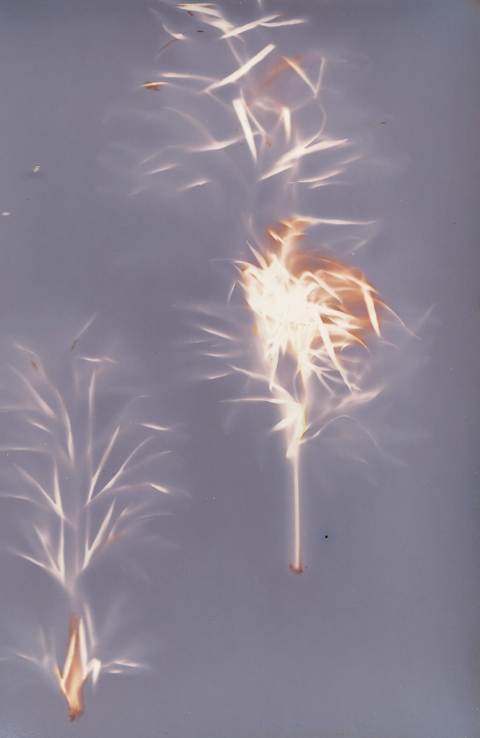
Lumen Print on Expired Photographic Paper.
Whether the image above is successful in a conventional sense almost doesn’t matter. In fact some of you may feel its not even a photograph, no camera was involved at all in its production. I would argue that what matters is that it records an event—light interacting with material over time. It’s evidence of a process, not a polished outcome. If you don’t like one outcome try again.
Repetition isn’t boring—it’s revealing, I could set up the same material in the same way and the results would be different.
Doing the same thing again and again, photographing the same view, using the same setup, returning to the same method, shows you how much changes even when you think nothing has.
Letting go of control
Some of the most rewarding photographic experiences come from letting go a little. Accepting that not everything needs to be sharp, clean, or resolved.
Photography can be a way of slowing down, paying attention, and engaging with the world over time. When you stop obsessing over the end product, the process itself often becomes far more memorable and satisfying than the final image.
Simon Hutton

Leave a Reply